

Buying property in Dubai has never been more accessible, thanks to the diverse range of property payment plans available. Understanding your payment structure options can make all the difference, regardless of your level of experience as an investor or as a first-time purchase. Let’s break them down so you can decide what works best for your budget and investment goals.

Dubai’s real estate market is globally recognized for luxury, innovation, and investor-friendliness. However, with rising prices, not everyone is ready to pay the full cost upfront. That’s where flexible payment plans come in. These plans are designed to:
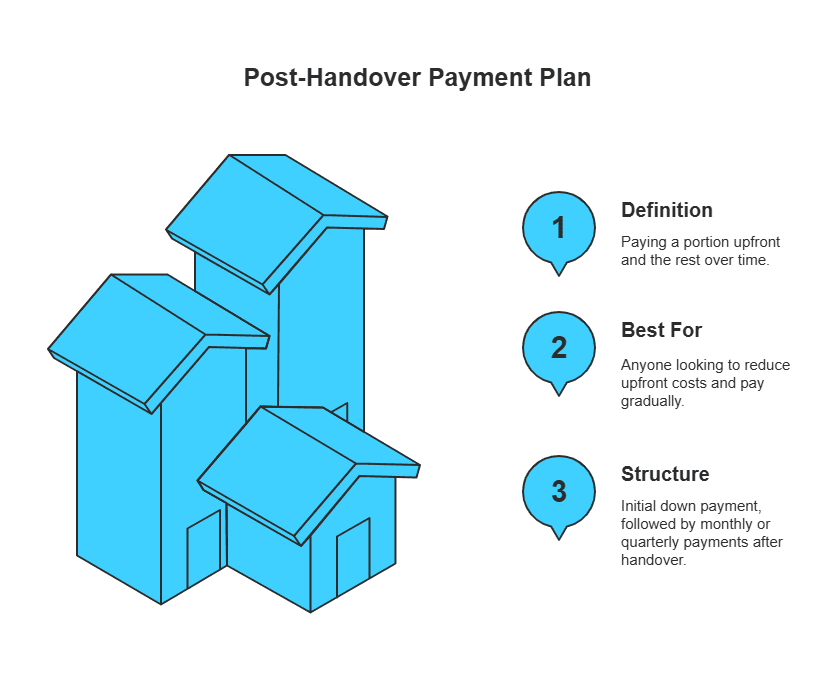
How It Works: You pay a portion upfront, move in, and then continue paying the rest over several years.
Recommended For: Buyers who need time to gather funds or prefer using rental income for payments.
Typical structure: 20%-30% down payment, followed by monthly or quarterly installments over 3–5 years after moving in.
Popular areas: Dubai Marina, JVC, Downtown Dubai
✅ Benefit: Own now, pay later.
⚠️ Potential Drawback: Slightly increased prices and strict penalties for missed payments.
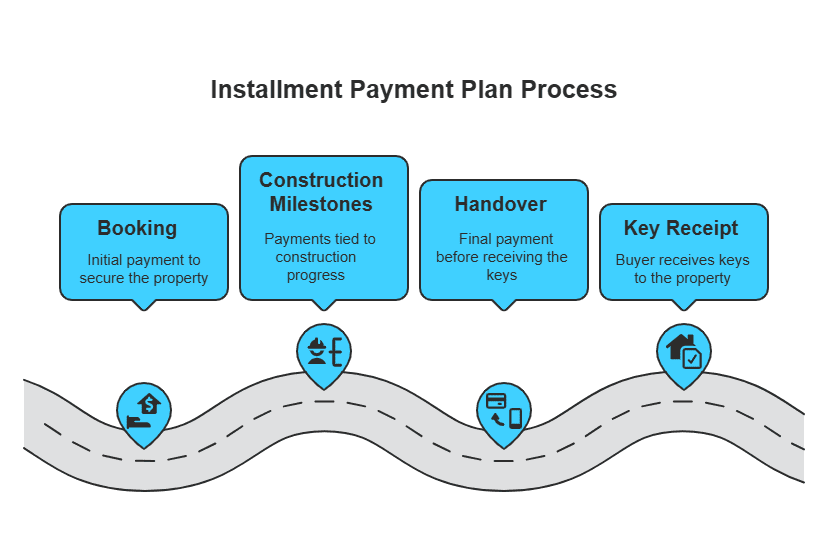
How It Works: Payments are made in fixed stages, usually tied to construction milestones, from booking until handover—before you receive the keys.
Recommended For: Buyers who have stable funds available during the construction period and want to avoid post-handover obligations.
Typical Structure: Common models include 10/90 (10% upfront, 90% during construction), 50/50, 60/40, 70/30, or custom plans tied to project progress.
Popular Areas: Business Bay, Meydan, Arjan, Dubai Creek Harbour
✅ Benefit: Often comes with better pricing and more developer incentives.
⚠️ Potential Drawback: Requires payments before you can move in, which may not suit buyers needing immediate use or rental income.
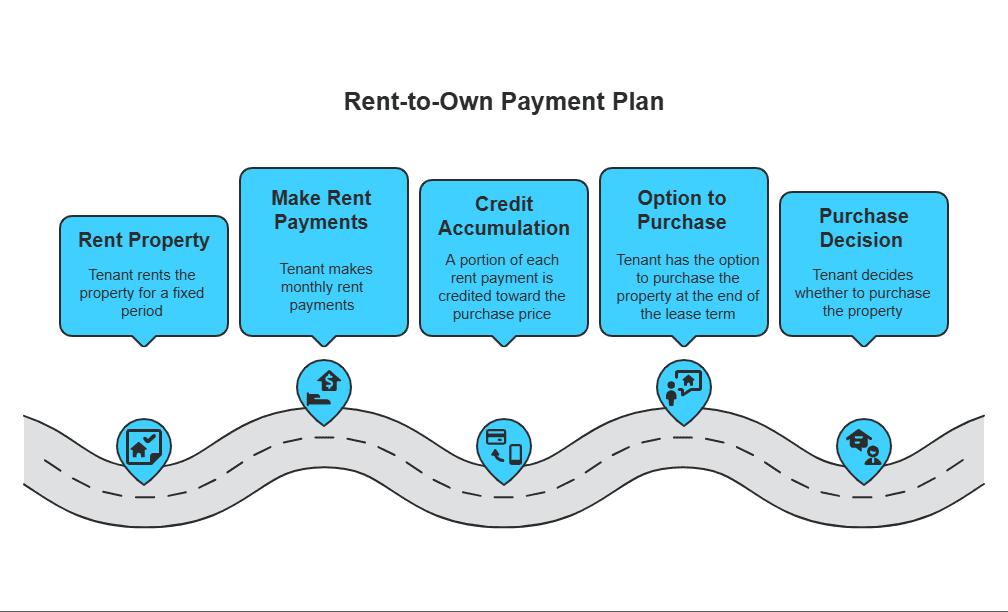
How It Works: You rent the property for a fixed period (typically 3–5 years), with an option to purchase it at the end. A portion of each rent payment is credited toward the property’s purchase price.
Recommended For: New expats who need time to stabilize their finances, entrepreneurs or freelancers with irregular income streams, and buyers who may not currently qualify for traditional financing due to limited credit history.
Typical Structure: The agreement typically lasts between 3 to 5 years. Each monthly rent payment includes a portion credited toward the eventual purchase price, and the buyer has the option to purchase the property at a pre-agreed price at the end of the lease term.
Popular Areas: Dubai Silicon Oasis, Al Furjan, Mirdif
✅ Benefit: Offers a path to ownership without needing a large upfront payment.
⚠️ Potential Drawback: Higher monthly rent and risk of losing equity if you choose not to buy later.
How It Works: A significant portion of the property price—typically 30% to 70%—is paid upfront. The remaining balance is settled upon project completion or handover.
Recommended For: Cash buyers who want to negotiate a better deal, investors looking to secure upfront discounts, and those who prefer to avoid the commitment of long-term installment payments.
Typical Structure: Buyers typically pay between 30% to 70% of the property price at the time of booking. The remaining amount is settled upon project completion or handover. This structure is most commonly used for ready or near-completion properties.
Popular Areas: Mohammed Bin Rashid City, Jumeirah Village Circle, Business Bay
✅ Benefit: May unlock price reductions of 2%–5% for early, high-value payments.
⚠️ Potential Drawback: Higher initial capital required and less flexibility if plans change.
How It Works: Some developers in Dubai offer customized payment structures tailored to a buyer’s financial situation, lifestyle, or investment strategy. These plans go beyond standard models and may include unique combinations or timelines.
Recommended For: This approach is best suited for VIP clients, high-net-worth individuals purchasing luxury properties, or buyers with irregular or non-traditional income streams (e.g., entrepreneurs, investors, or overseas earners).
Typical Structure: The terms vary widely but may include extended durations of up to 10 years, seasonal or balloon payments, or a hybrid of installment and post-handover stages—entirely customized based on mutual agreement with the developer.
Popular Areas: Palm Jumeirah, Dubai Hills Estate, Emirates Hills
✅ Benefit: Maximum flexibility and negotiation potential to match personal or business cash flow.
⚠️ Potential Drawback: Custom plans may lack transparency or include higher long-term costs and limited resale options during the payment period.
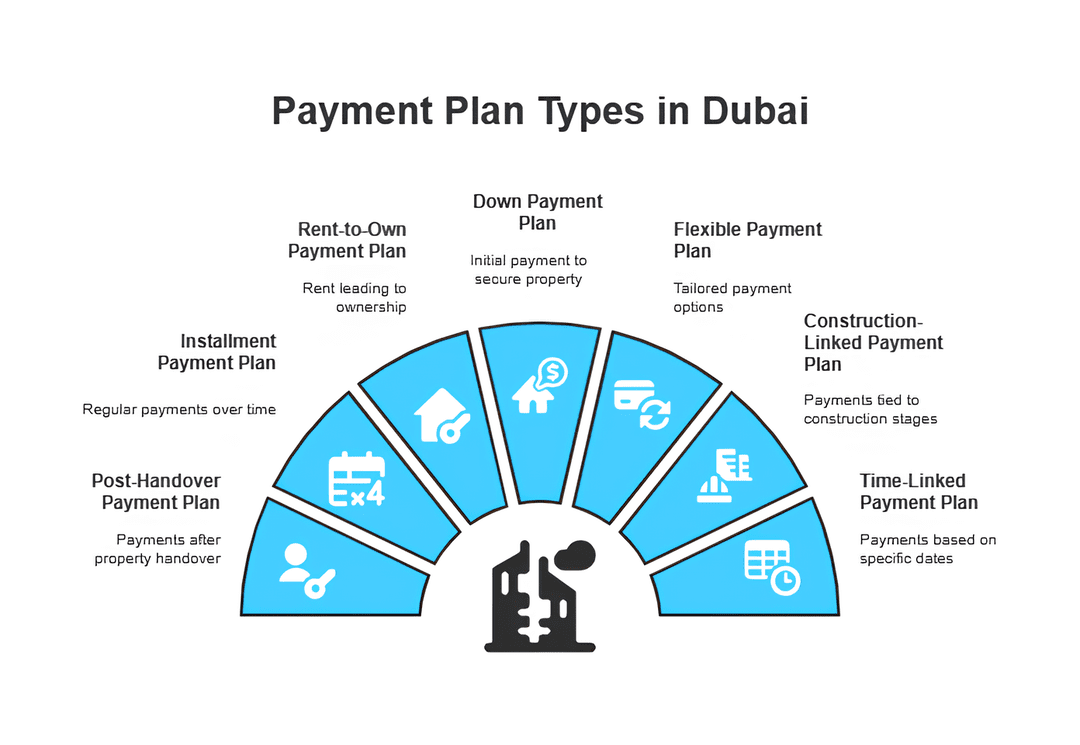
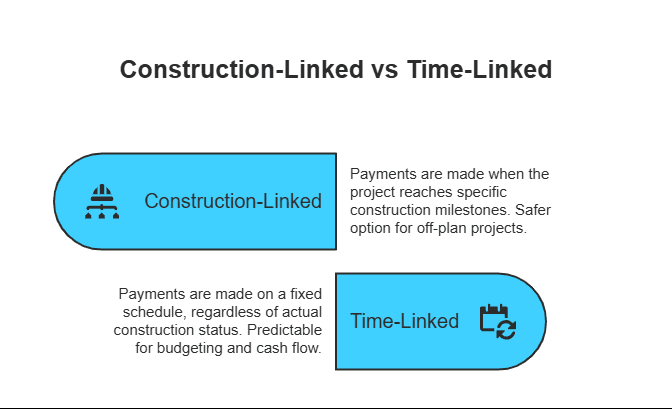
How It Works: Payments are made when the project reaches specific construction milestones.
Typical Milestones Include:
✅ Advantage: Safer option for off-plan projects—your payments follow actual progress.
❌ Drawback: Not ideal if the project faces construction delays.
How It Works: Payments are made on a fixed schedule—such as monthly or quarterly—regardless of actual construction status.
✅ Advantage: Predictable for budgeting and cash flow planning.
❌ Drawback: Higher risk if the developer falls behind schedule, as payments continue regardless of progress.
Payment plans make buying property in Dubai more accessible by reducing upfront costs and offering flexible terms tailored to your finances. They allow buyers to enter high-value projects without full payment, and in some cases, rental income can help cover future installments. However, it’s important to read the fine print—some plans come with strict late penalties, unclear title deed terms, and hidden fees. Always review the contract carefully, consider your ability to resell early, and work only with reputable developers.
Leave a Request and We'll Get Back to You Soon!
 1
1 Loading...